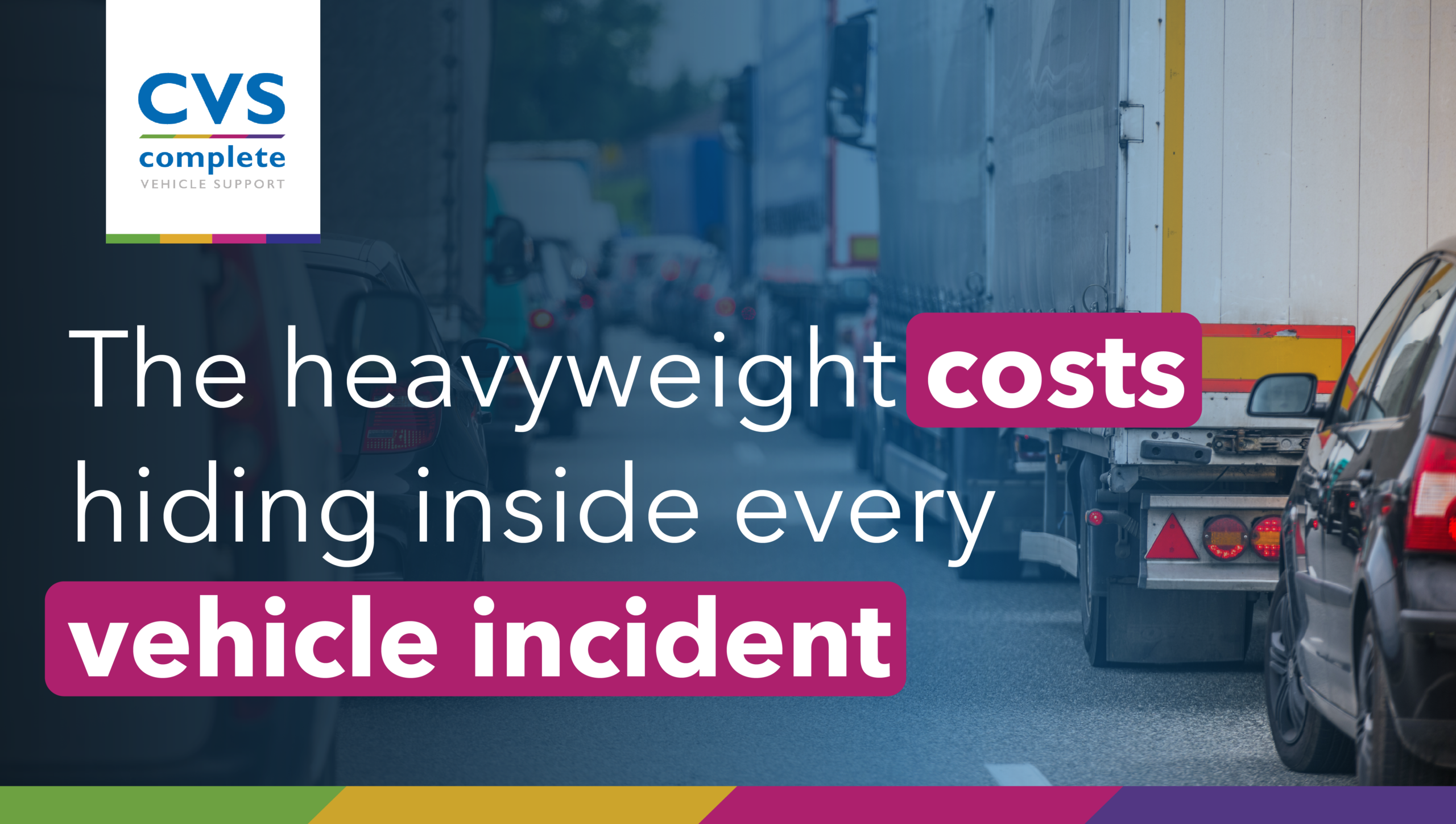
When a vehicle is involved in an incident, the repair bill often takes centre stage. But the biggest financial impact isn’t always the most obvious.
Recovery charges, storage fees, replacement vehicles, extended vehicle off road (VOR) time and lost productivity can all add significant weight to the final cost. For insurers and fleet operators, the challenge isn’t simply managing the damage. It’s understanding the full financial impact of an incident and knowing when to intervene before unnecessary costs escalate.
Because when it comes to vehicle incidents, it’s often the hidden costs that deliver the heaviest blow.
The real cost of a vehicle incident goes beyond the repair
The initial repair estimate is only one part of the financial picture. A vehicle incident can also generate recovery and storage charges, replacement vehicle costs, internal administration and the cost of keeping a working vehicle off the road.
For a fleet operator, the impact may extend to disrupted routes, missed customer commitments, driver availability and additional pressure on other vehicles. For an insurer, delays and fragmented decision-making can increase the overall cost and complexity of handling an incident.
These costs are not always avoidable. What matters is understanding which are necessary, which are continuing longer than they should and where timely decisions could make a difference.
How hidden vehicle incident costs quickly add up
Consider a hypothetical example: a working fleet vehicle is damaged in an incident and needs recovery before it can be assessed and repaired.
- Recovery and storage: delays in arranging the next stage may mean the vehicle remains in storage longer than necessary.
- Assessment and authorisation: slow decisions can postpone the start of repairs.
- Replacement transport: if another vehicle is needed to keep operations running, hire or mobility costs may continue throughout the delay.
- Vehicle downtime: an unavailable vehicle can disrupt schedules, productivity and customer commitments.
- Administration: repeated calls, duplicated updates and chasing multiple parties consume additional time.
Individually, these items might appear reasonable. Taken together, they can make the financial impact considerably greater than the initial repair estimate. The objective is not to challenge every cost automatically, but to identify unnecessary expense and keep the overall incident moving.
Where fleet operators and insurers can lose control
Costs can build up through a series of small missed opportunities: an incident reported with incomplete information, a vehicle awaiting authorisation, a delay that goes unchallenged or a replacement vehicle that remains in use without a clear review point.
When communication is fragmented between insurers, repairers, suppliers and customers, it becomes harder to establish what is happening, who needs to act and whether a charge or delay is justified. This is where a proactive approach makes a difference.
Why visibility matters throughout the repair journey
Good oversight should extend beyond the first assessment or repair estimate. It means understanding the vehicle’s position at each stage, from recovery and authorisation to parts availability, repair progress and handover.
Clear information helps the people managing an incident identify delays earlier, challenge unexpected costs, follow up outstanding actions and provide meaningful updates to customers. Technology can make that information easier to access, but experienced people are still needed to interpret it and act.
For a closer look at how a structured process supports these decisions, explore CVS’s repair management services
How early intervention helps control vehicle incident costs
The sooner an incident is understood and the appropriate next steps are agreed, the more opportunity there is to manage its wider impact. Effective first notification of loss (FNOL) helps establish accurate details from the outset and supports timely decisions about recovery, assessment and onward handling.
Early intervention can also help clarify responsibilities, coordinate suppliers, review repair progress and identify charges that need closer examination. Where third parties are involved, timely engagement and clear communication can reduce the risk of unnecessary escalation.
CVS combines practical repair management experience, supplier relationships and proactive intervention to help customers maintain oversight and make informed decisions. The goal is not to promise that every delay or cost can be eliminated; it is to reduce avoidable disruption and maintain control throughout the process.
Find out more about the importance of getting the first stage right through CVS’s FNOL services.
Why accurate repair assessment matters
Challenging a cost is only useful when there is a sound basis for doing so. Repair complexity, parts requirements and the correct repair method all influence what an appropriate estimate looks like. That is why engineering expertise and accurate assessment matter alongside cost control.
For wider industry context on vehicle safety and repair research, see Thatcham Research. Any specific technical claim should be supported by an appropriate source rather than assuming every repair follows the same process.
Don’t let hidden costs deliver the knockout blow
Not every cost associated with a vehicle incident can be avoided. But unnecessary delays, poor communication and missed opportunities to intervene can add financial pressure that businesses do not need.
At CVS, we combine experienced people, established supplier relationships and proactive repair management to help customers maintain visibility, challenge unnecessary costs and keep incidents moving towards resolution.
Because managing an incident effectively is not just about the initial repair. It is about maintaining control of everything that follows.
Looking to take greater control of your vehicle incident costs? Contact the CVS team to discuss how proactive repair management and early intervention could support your business.