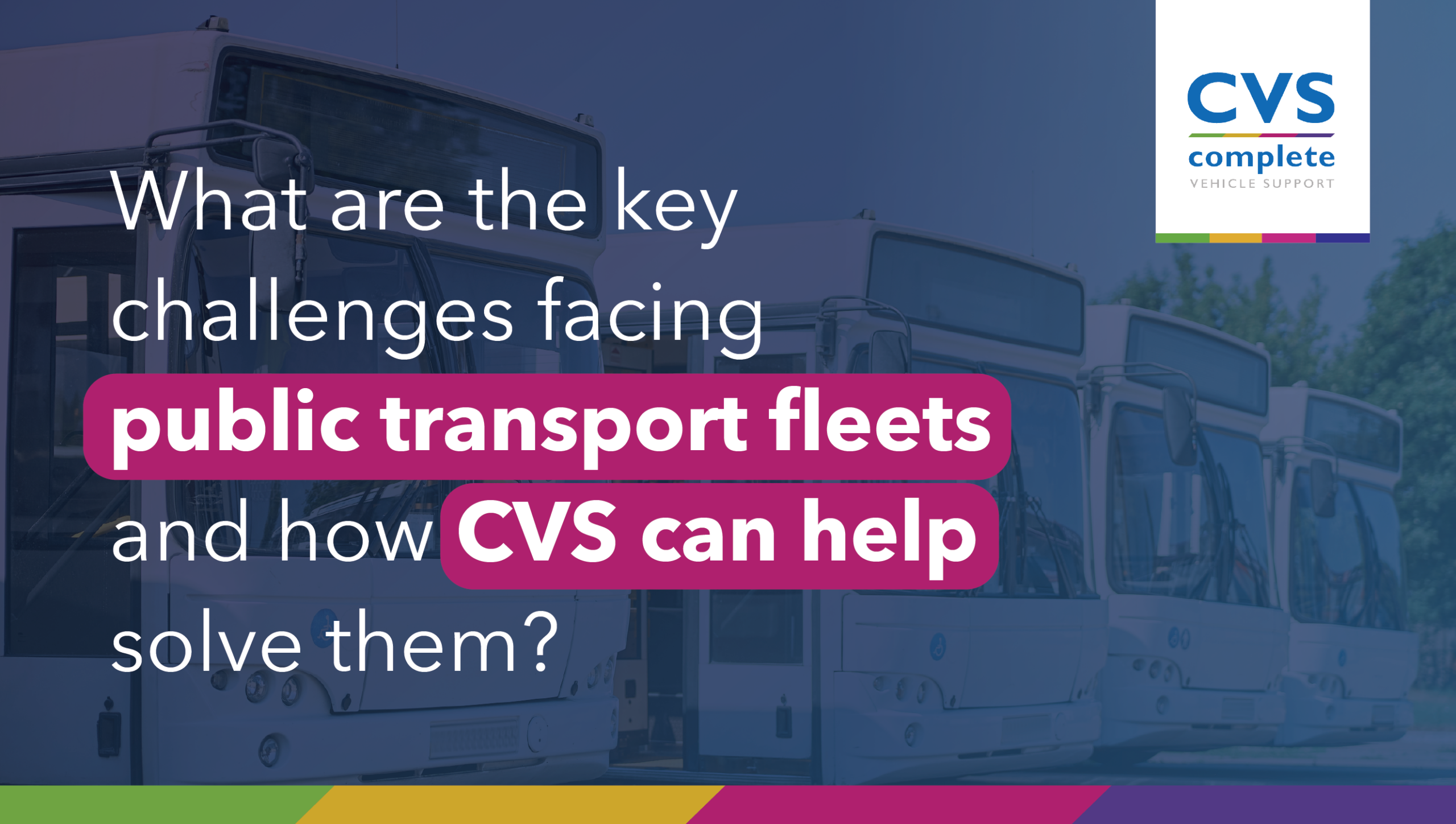
For Fleet Managers and Fleet Insurance Managers operating within public transport, performance is measured by route reliability and passenger satisfaction, as well as by how effectively incidents are managed, how quickly vehicles return to service and how confidently costs, compliance and operational risks can be controlled across highly visible and time critical environments.
For public transport fleets who operate under constant scrutiny, service disruption can have immediate consequences for communities, contractual performance and public confidence, and as networks expand, vehicles become more technologically complex and demand for consistent service continues to increase, fleet operators are now facing a new generation of operational challenges which require structured, responsive and insight led support to manage effectively.
While much attention is often placed on preventative maintenance and route optimisation, the reality is that incident response and repair management plays an equally defining role in maintaining service continuity.
This is because during these moments of disruption, decisions around triage, repair allocation, oversight and communication directly influence downtime, cost exposure and passenger experience. As a result, working with a specialist Repair Management company such as CVS, allows public transport fleets to move from reactive incident handling to a more controlled and strategically managed approach.
Public transport fleets face: increasing pressure to minimise vehicle off road time
Vehicle availability remains one of the most significant challenges facing public transport fleets today, as even a small number of vehicles being removed from service can lead to route cancellations, timetable disruption and increased reliance on costly contingency planning.
But by working with CVS, Fleet Managers and Fleet Insurance Managers are able to benefit from rapid first notification of loss (FNOL) processes, early technical triage and immediate routing to appropriate repair facilities – all of which helps reduce delays at the most critical stage of the repair journey and ensures that vehicles are assessed and progressed quickly following an incident.
What’s more, through early intervention and detailed technical assessment, CVS can also work to identify potential repair complications before vehicles even arrive at a repair facility, no matter whether that relates to parts availability, specialist vehicle requirements or repair methodology, which ultimately supports more predictable repair timelines, reduces downtime and helps maintain consistent service delivery across transport networks alike.
Public transport fleets face: rising repair costs and increasing financial scrutiny
Cost control within public transport fleets is becoming increasingly complex, particularly as vehicle technology evolves to include advanced safety systems, specialist passenger accessibility equipment and alternative fuel powertrains, which can increase repair complexity and overall claim value.
Here, CVS supports Fleet Insurance Managers by providing access to carefully selected and performance monitored repair networks that are benchmarked for capability, efficiency and cost effectiveness, alongside engineering oversight that ensures repair decisions remain proportionate, justified and aligned with manufacturer standards.
Then, through structured estimate validation, repair methodology review and proactive cost monitoring, CVS enables fleets to maintain tighter financial control across individual incidents and wider insurance programmes to ensure expenditure is managed without compromising vehicle safety, compliance or passenger confidence.
Public transport fleets face: maintaining consistent repair quality and compliance standards
Public transport vehicles operate under strict safety and regulatory requirements, meaning that repair quality is not only important for asset protection but also for compliance, passenger safety and long term operational reliability, and without structured oversight, repair outcomes can vary significantly between suppliers.
CVS addresses this directly by working with vetted repair partners, audited facilities and monitored workmanship standards to ensure that all repairs are completed in accordance with manufacturer guidance and regulatory expectations – all of which provides Fleet Managers with reassurance that vehicles are being returned to service in a safe, compliant and reliable condition.
In fact, it is this consistent quality control that also reduces the risk of repeat repairs, secondary claims exposure and unexpected maintenance issues, and further supports longer asset life and improved operational confidence across public transport fleets.
Public transport fleets face: limited visibility across the repair lifecycle
For many fleet operators, one of the greatest operational frustrations is a lack of clear, real time visibility across the repair process, which can make it difficult to plan vehicle availability, communicate accurately with operational teams and report confidently to stakeholders.
To help overcome this, CVS provides enhanced visibility through detailed reporting, live repair status tracking and comprehensive outcome analysis which enables Fleet Managers and Fleet Insurance Managers to monitor progress, identify emerging issues early and make informed operational and financial decisions based on accurate, up to date data.
This level of transparency also supports trend analysis and strategic planning, which in turn allows fleets to identify recurring incident types, manage risk more effectively and continuously improve operational performance through evidence based decision making.
Public transport fleets face: managing third party exposure and protecting passenger experience
Public transport incidents often involve multiple stakeholders including passengers, other road users, local authorities and transport regulators, meaning that effective early engagement is critical in controlling third party exposure and protecting organisational reputation.
For fleet operators, CVS supports this through prompt contact following incidents and structured information capture processes that help contain risk at the earliest opportunity, helping to reduce the likelihood of inflated third party costs, prolonged dispute and unnecessary escalation.
At the same time, clear communication, efficient repair coordination and faster vehicle resolution help minimise disruption for passengers and operational teams alike, working to ensure that service providers can maintain trust and confidence even when incidents take place.
Looking ahead
At CVS, we understand that effective repair management is about managing incidents just as much as it is about protecting essential services, supporting communities and delivering consistent operational outcomes across every stage of the fleet lifecycle.
If you would like to discuss how we can support your public transport fleet operations, please visit our website, call 0333 3609525 or email: enquiries@completevs.co.uk to speak with our team today.